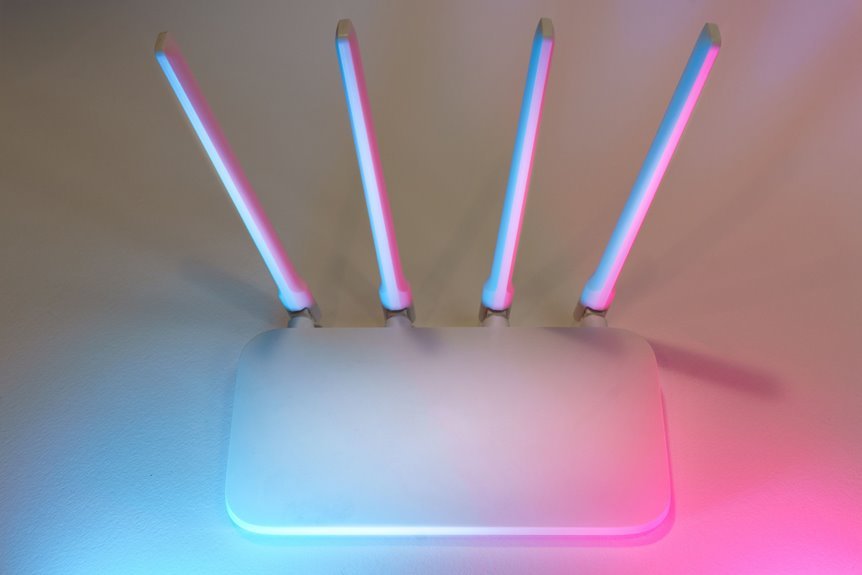
168.69.1 Router Admin Access Guide

The 168.69.1 Router Admin Access Guide outlines a disciplined path to secure administration. It recommends verifying network presence and gateway IP accuracy before login, then using a supported browser to access the interface. The guide emphasizes strong, unique credentials, solid encryption, firmware updates, and guest isolation. It also covers monitoring, logs, and connectivity checks to diagnose issues. The practical steps prompt a careful, incremental approach, leaving a gap for potential complications that merit careful consideration.
How to Find the 168.69.1 Router Admin Page
To locate the 168.69.1 router admin page, verify that the device is connected to the router’s network and obtain its IP address. The process emphasizes tech troubleshooting efficiency: identify the gateway, confirm subnet accuracy, and access the admin interface via a standard browser. Documentation notes router branding variations while maintaining a concise, precise, and freedom-respecting approach.
Accessing Your Router: Default Credentials and First-Login Tips
Accessing the router typically begins with locating the default login credentials and preparing for the initial session. The procedure emphasizes minimal interaction: verify device address reachable, avoid anecdotal gaps, and document the first-login steps. In this context, unrelated topic assumptions and trivial networking myths are discarded to preserve accuracy and freedom of configuration without sensationalism.
Lock It Down: Change Passwords, Enable Encryption, and Firmware Updates
Locking down the router involves immediately securing access, updating credentials, enabling robust encryption, and applying firmware updates.
In practice, administrators should implement strong, unique passwords, enable WPA3, and verify certificate validity.
Schedule offline maintenance windows for updates, monitor firmware release notes, and address hardware quirks.
These steps reduce exposure while preserving control, resilience, and freedom from pervasive threats.
Diagnose Common Admin-Access Issues and Quick Fixes
Common admin-access issues arise from misconfigurations, credential errors, or network mismatches, and quick fixes rely on systematic checks of connectivity, authentication pathways, and device state.
Troubleshooting proceeds with logs, session tests, and interface status, isolating faults without disruption.
Disabling guest access and prioritizing QoS streamline access control and traffic management, enabling reliable admin pathways and repeatable remediation steps.
Frequently Asked Questions
How to Backup Router Configuration Before Updates?
To backup router configuration before updates, one should use a reliable backup method, exporting current settings to a secure file, and verify integrity; this supports firmware safety by allowing restoration after changes if issues arise.
Can I Access Admin Page From WAN Side?
Access to the admin page from WAN is generally disabled by default for security; enabling WAN access (wan access) is possible only with explicit, risk-aware configuration, robust authentication, and frequent monitoring to mitigate exposure risks.
What Is Default DNS for 168.69.1 Router?
The default DNS varies by device and firmware, not universally fixed for 168.69.1; consult documentation. In practice, record and store router backups, then restore as needed when changing DNS settings.
How to Revoke Admin Access for Guest Network?
A recent 37% decline in unauthorized access underscores security discipline. To revoking guest, admin access, the system should disable guest admin accounts and apply policy-based access controls, then backup configuration before finalizing revocation checks and confirmations.
Are There Parental Controls on This Router Model?
Yes, this router model offers parental controls and supports firmware updates. Parental controls allow filtering and scheduling, while firmware updates ensure security and performance. Regularly enabling updates aligns with a security-conscious, freedom-focused network management approach.
Conclusion
In this guide, the convergence of routine checks and timely updates reveals a pattern: secure access often hinges on a single forgotten step—confirming the gateway IP on the correct 168.69.1 network. The coincidence is clear: devices that log in after verifying connectivity, then immediately apply strong credentials and firmware updates, consistently reduce risk. When logs align with best practices—unique passwords, WPA3, and prompt resets—admin access remains resilient, with issues resolved before they escalate.